
By Kate Oczypok
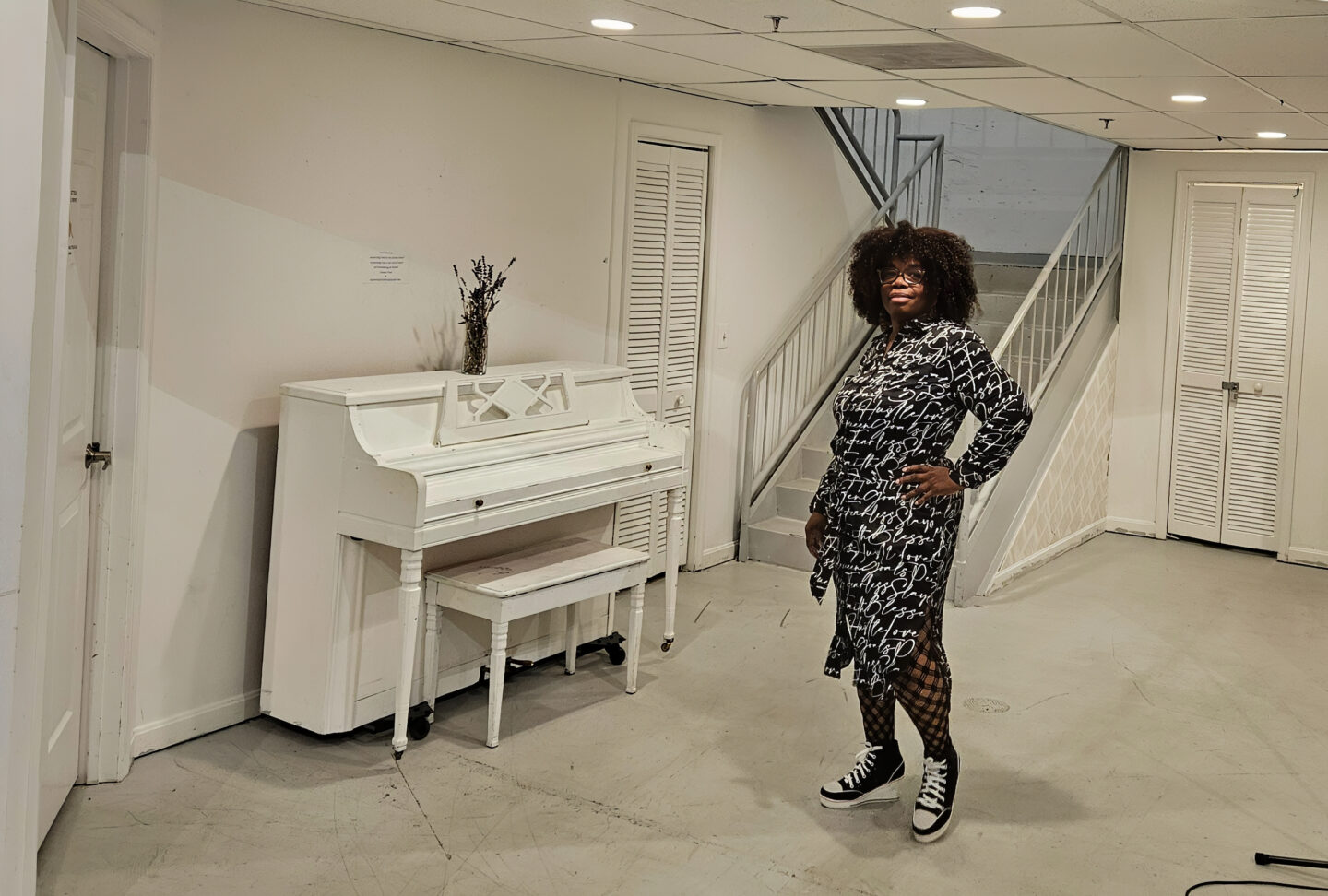
Growing up, poet, author, and motivational speaker Kim B Miller wasn’t what she calls a “poetry girl” or an “English girl.” Instead, she gravitated toward math and frequently tutored in the subject. A self-professed “horrible speller,” Miller didn’t know much about poetry. Years later, she is now the first and only Black poet laureate in Prince William County.
“I think it’s a gift from God, and I’m grateful for it, but it’s not one of those things where, when I was young, I always knew I’d be a poet,” she said.
Below, we talk to Miller about how she became a poet, her writing process, how poetry can help those struggling with their mental health, and more.
Tell us more about how you became a poet. Which poet or poems were your first inspiration?
I’m a native New Yorker. When I was in New York, I started to get a little bit into poetry, and then I went to a bookstore called Hue-Man Books in Harlem, and it was a critiquing open mic. I went and performed and I knew after I went they’d tell me how I did. They thought I did very well, and the feedback was fantastic.
I stopped writing that day, and I don’t really have a reason as to why. If I knew the reason, I’d happily tell it. When I moved to Virginia, Jesus was like, it’s time now. I said, time for what? Poetry. I was like, really? I hadn’t read very many poets. I thought different parts of the Bible were poetic.
As far as poems and the type, I always wrote full poems and “free-write” which is basically just writing to write.
What is your writing process like?
My process is I write when I’m happy, I write when I’m sad, I write when I’m angry, and I write for people who have not been heard. A lot of the poems I write are about bad parents, even though I had two great ones, but I know too many people who had bad parents. My process for full poems is to just write on a subject that God gives me, something that pisses me off, or something where I’m like, “Oh, that’s beautiful!”
Now I got into haiku because a friend of mine got an open mic and said, this is a haiku. I said, what is that? I went home and did what a good poet would do, I looked up haiku. When I saw they were 17 syllables, I was like, oh no, back to free-form. The haiku kept calling me, though. I challenged myself, that’s normally how I get myself out of my comfort zone and I tried it. I fell in love with non-traditional haiku because traditional haiku are only about nature.
You made history as the first and only Black poet laureate in Prince William County. Do you have any advice for youth who may want to become the second?
When I go talk to youth, which is often because I’m a teaching artist as well, I tell them it’s going to feel uncomfortable sometimes when you’re the first because you don’t know what to expect, you don’t know how people are going to receive you. I don’t necessarily have those issues because I’m a native New Yorker, born in Brooklyn. My mindset and headspace are a little different. I’m like, I’m here, you’re going to love me or hate me, I’m good with it.
I know everybody doesn’t feel that way. Some people ask, why doesn’t so-and-so like me? So, I get that people have different sensitivities. I tell them to walk in their truth because I could have talked myself out of applying. I could have said they weren’t looking for a spoken word poet because they’d always had traditional poets. I also could have thought they weren’t ready for a Black poet, since they’d never had one before. But if I had let those thoughts stop me, I never would have had the opportunity.
You cannot get something that you don’t apply for. If you talk yourself out of it because you’re the first or second or whatever, you also eliminate the opportunity and create your own non-victory. You create your own non-victory when you don’t apply, then say you didn’t get it because you’re Black, Puerto Rican, lesbian, gay, etc.., and then you make it true by not applying. Then, when you don’t get it, you go, “A-ha!” but you didn’t apply.
Be true to yourself, and not everything is for everybody, but just because you don’t get it the first time does not mean you shouldn’t try again, because I did not get it the first time I applied.
Tell us more about your poetry open mics at Clearbrook Center of the Arts. What typically happens during those evenings?
This open mic is family-friendly. What I mean by that is there are no curse words and no sexually explicit poetry. We want people to be able to walk in with their children. Sometimes we’ve had very young performers; young kids have performed before. We sometimes have featured artists who are young.
The open mic is every third Monday and starts at 7 p.m. When you come in, if you want to perform, there’s a sign-up list. We also give people an opportunity to talk about their business. I think that’s really important because we can’t support you if we don’t know your business exists.
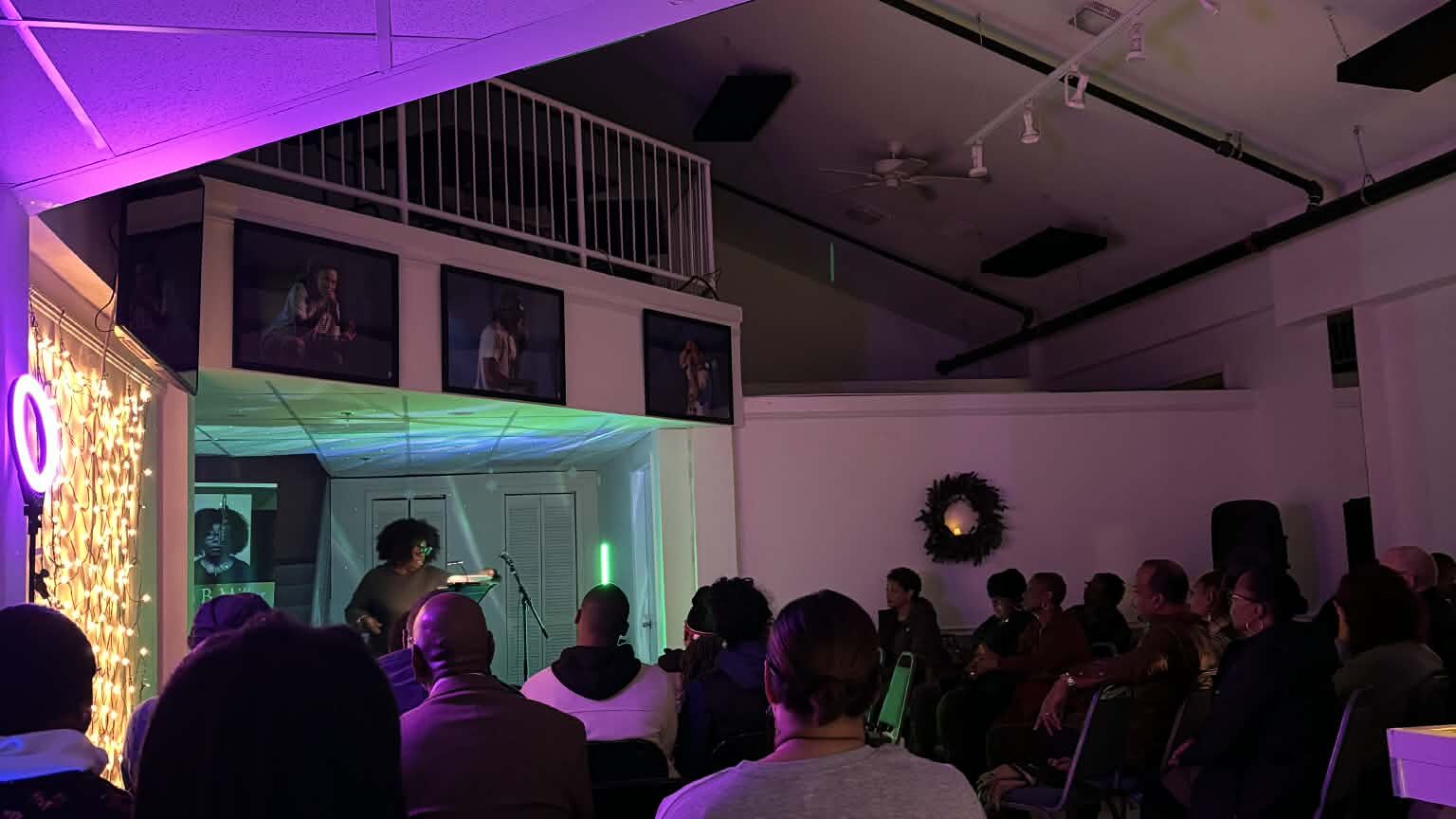
Kim B . Miller Performing at Speak Into Existence Open Mic
With May being Mental Health Awareness Month, can you talk a bit about how poetry and writing can be inspiring for those struggling with their mental health?
Writing is one of those things where people think, what’s the big deal? It’s just words. Writing is so mentally stimulating. I call it medicine. To be able to put my pain into words, to be able to speak what I’m talking about, and for someone else to hear it and go, I got it, I’ve been there, or something along those lines. With another great poet, I used to do classes at a women’s prison in Maryland.
They allowed us to have showcases in the prison. People couldn’t come from outside, but the people inside could come. To see some of the women prosper from barely saying anything to getting out there performing. Writing and poetry are medicine.
Can you tell us more about your favorite TEDx talks? Has anyone come up to you afterward and let you know how much you inspired them?
It’s one of the most rewarding things in the world when someone comes up to me and says, “You don’t know how much what you said affected me,” or, “I really needed to hear that today,” or tells me my talk made a difference in their life.
No matter how long we’ve been performing, I don’t think there ever comes a time when those words stop meaning something to us. They absolutely do because we’re trying to make a difference.
What do you like most about working at Tackett’s Mill?
My hubby and I love Hector’s! Safeway has my favorite cookies with the chocolate on top, too. I love working at Clearbrook. It’s a beautiful space and so open. It’s so welcoming.
Explore Kim’s website to learn more about her work and background: https://www.kimbmiller.com/about-kim/